ReFED
Data and solutions for food waste.
Overview
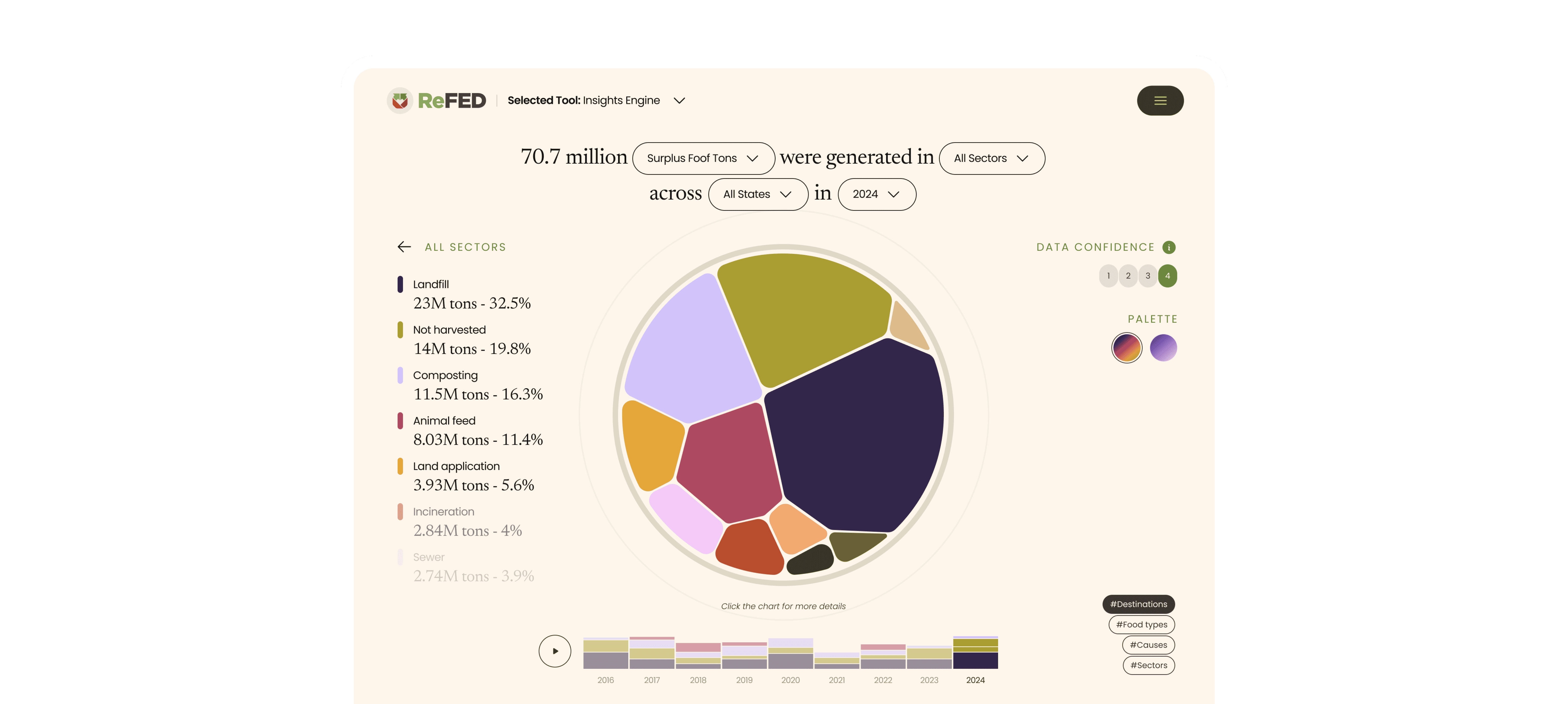
Translated complex impact-modeling into a unified platform—connecting 6 tools, 40+ solutions, and 1,600+ providers to tackle 63M tons of annual food waste.
ReFED is a U.S. nonprofit advancing data-driven solutions to reduce food loss and waste. The ReFED Insights Engine helps organizations understand where waste happens and prioritize actions through connected tools and shared data, staying structurally consistent even as the brand evolved.
"The ReFED Insights Engine has become the industry standard, providing a first-of-its-kind digital hub to turn food waste data into climate action." ⎯ As featured in Forbes & The Food Institute

Role: Design Lead
Design-leading a complex platform through workshops, alignment, and data storytelling
Core Contributions:
- Collaborative Product Strategy: Bridged the gap between data scientists and engineering teams, translating impact-modeling methodologies into a high-performance web experience.
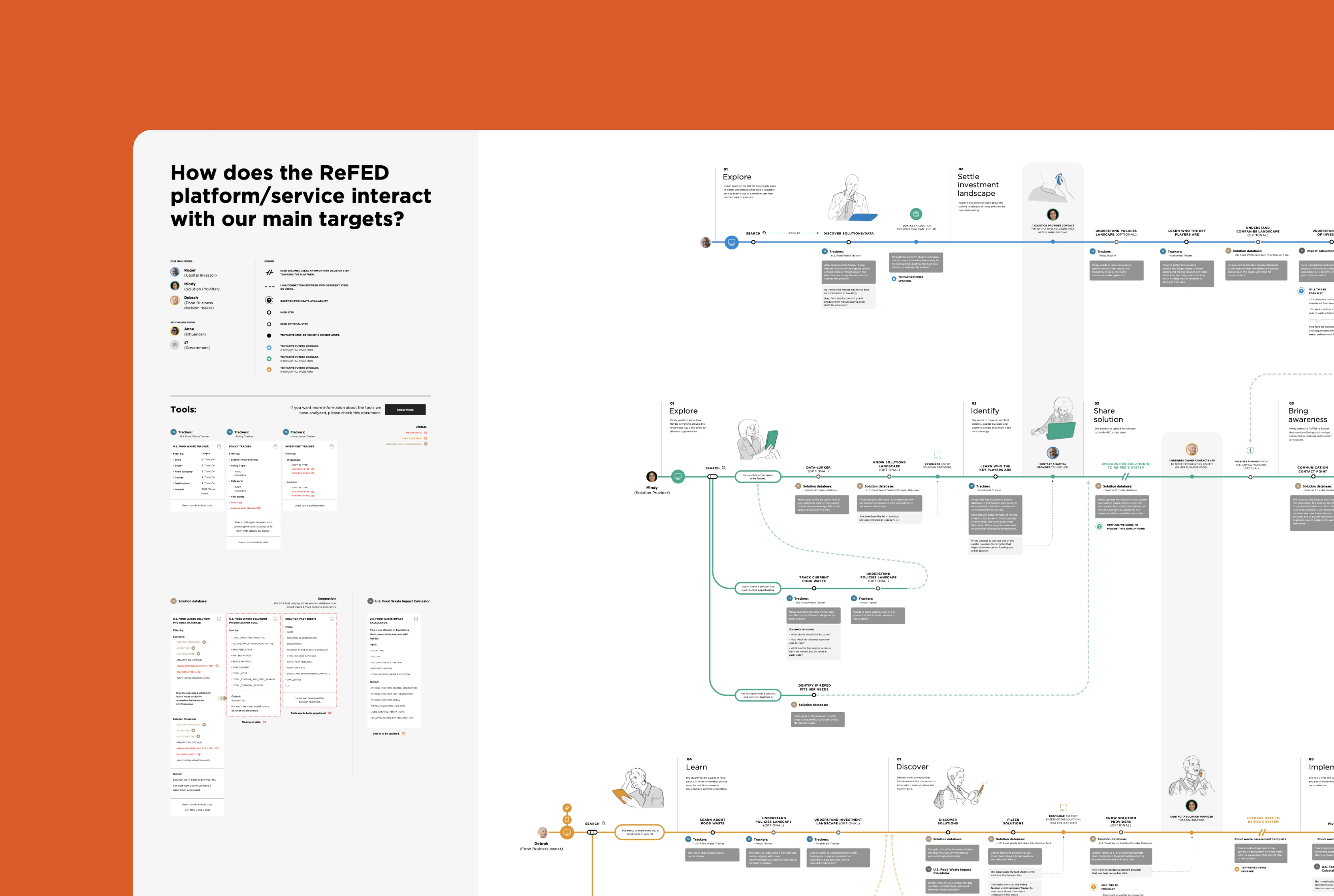
- Unified Decision Journey: Connected the ecosystem so users could move from national insights to sector-specific actions without jumping between disconnected tools.
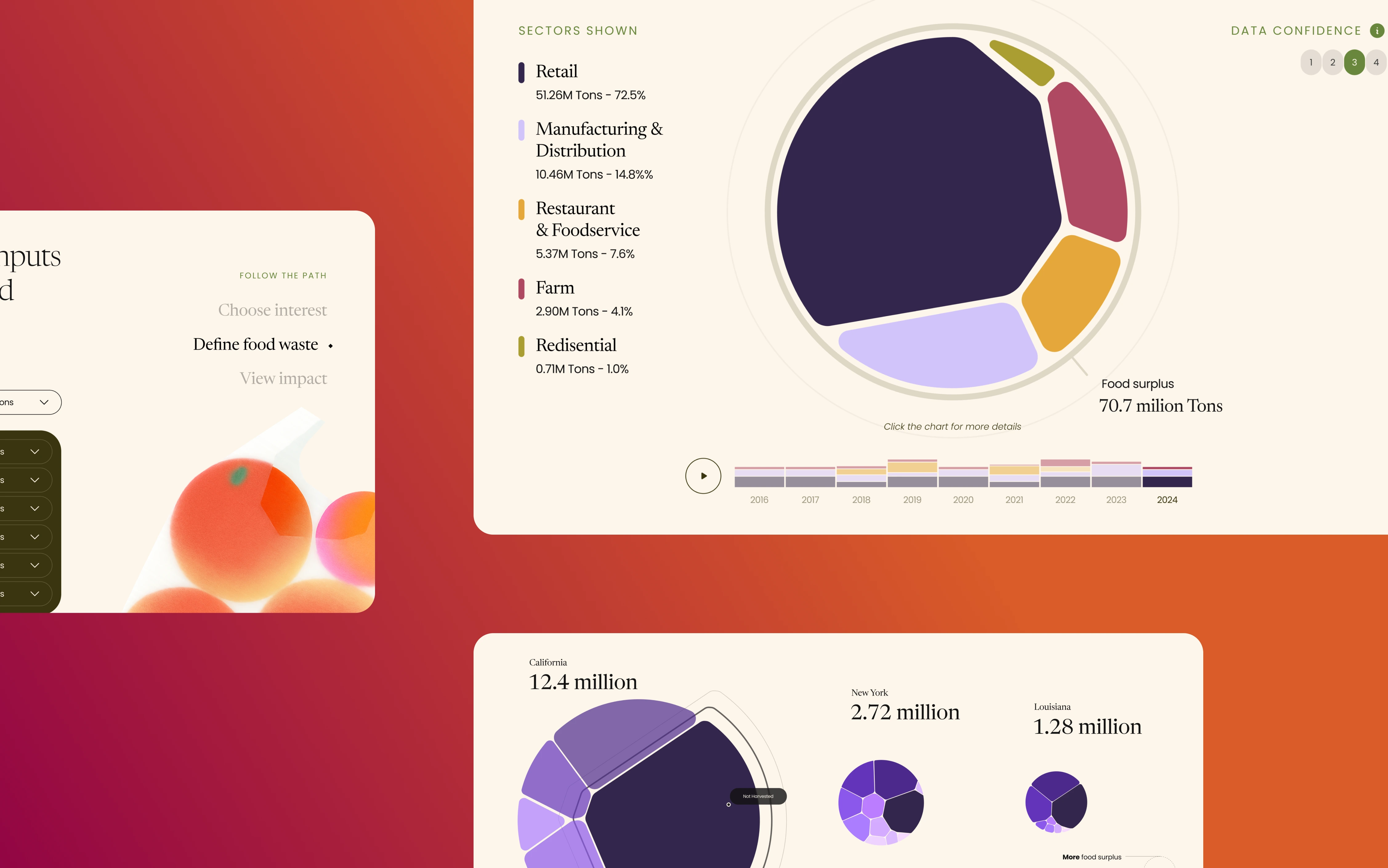
- Complex Data Visualization: Developed a clear visual language to represent intricate datasets, making environmental and financial metrics accessible to non-technical decision-makers.
Results
A unified platform that makes a national problem measurable
63 million tons of food waste quantified (U.S.)
ReFED estimates that roughly 25% of all food in the U.S. (63M tons) goes unsold or uneaten, making the platform a key reference for understanding the scale of the problem.
Deep-dive analysis of 40+ solutions
The Insights Engine breaks down 40+ food waste reduction solutions, including impact, feasibility, and the funding required to implement them.
6 tools, one cohesive system
From insight to action (1,600+ providers)