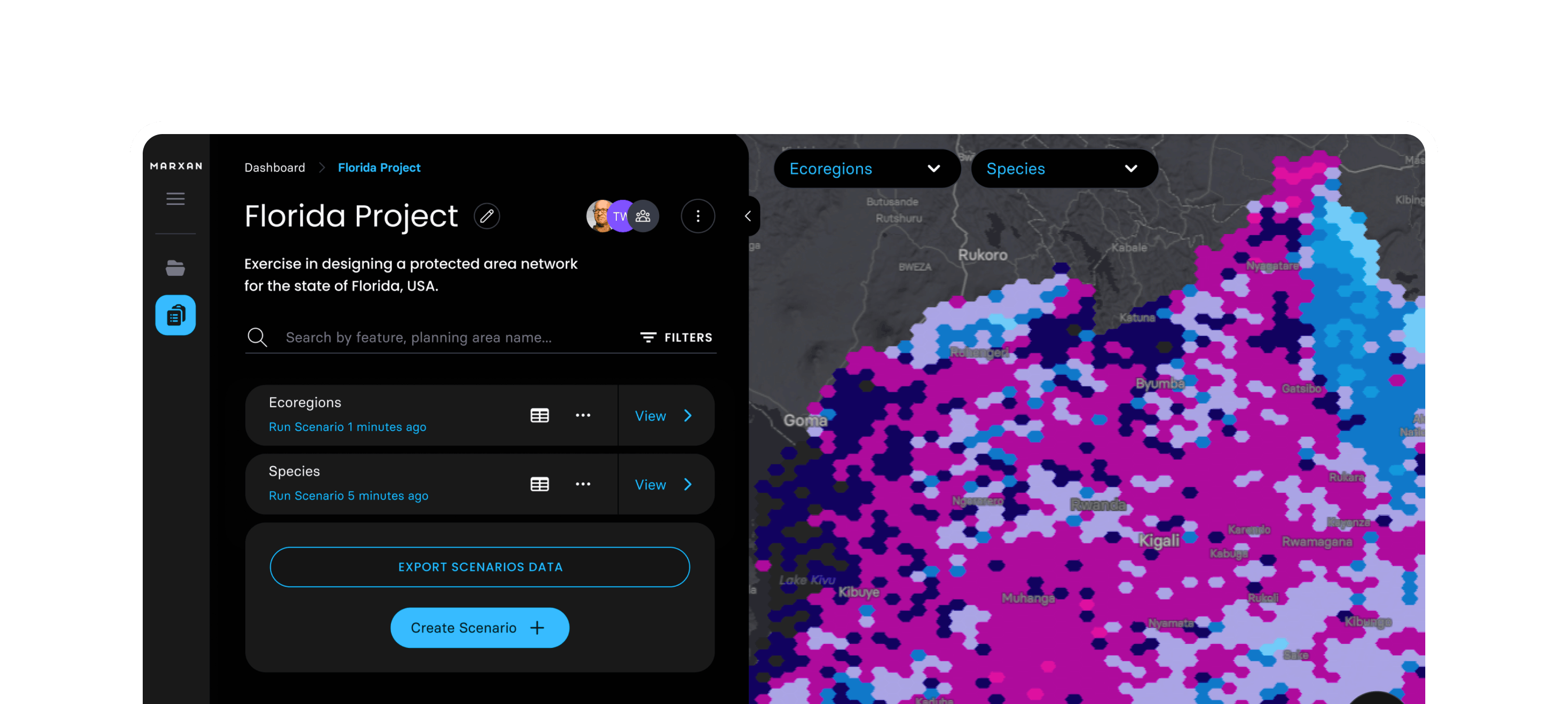
Marxan Planning Platform
Democratizing spatial conservation planning.
Overview
Led design to scale conservation planning from desktop to cloud—23x faster, serving 1,300+ organizations in 100 countries.
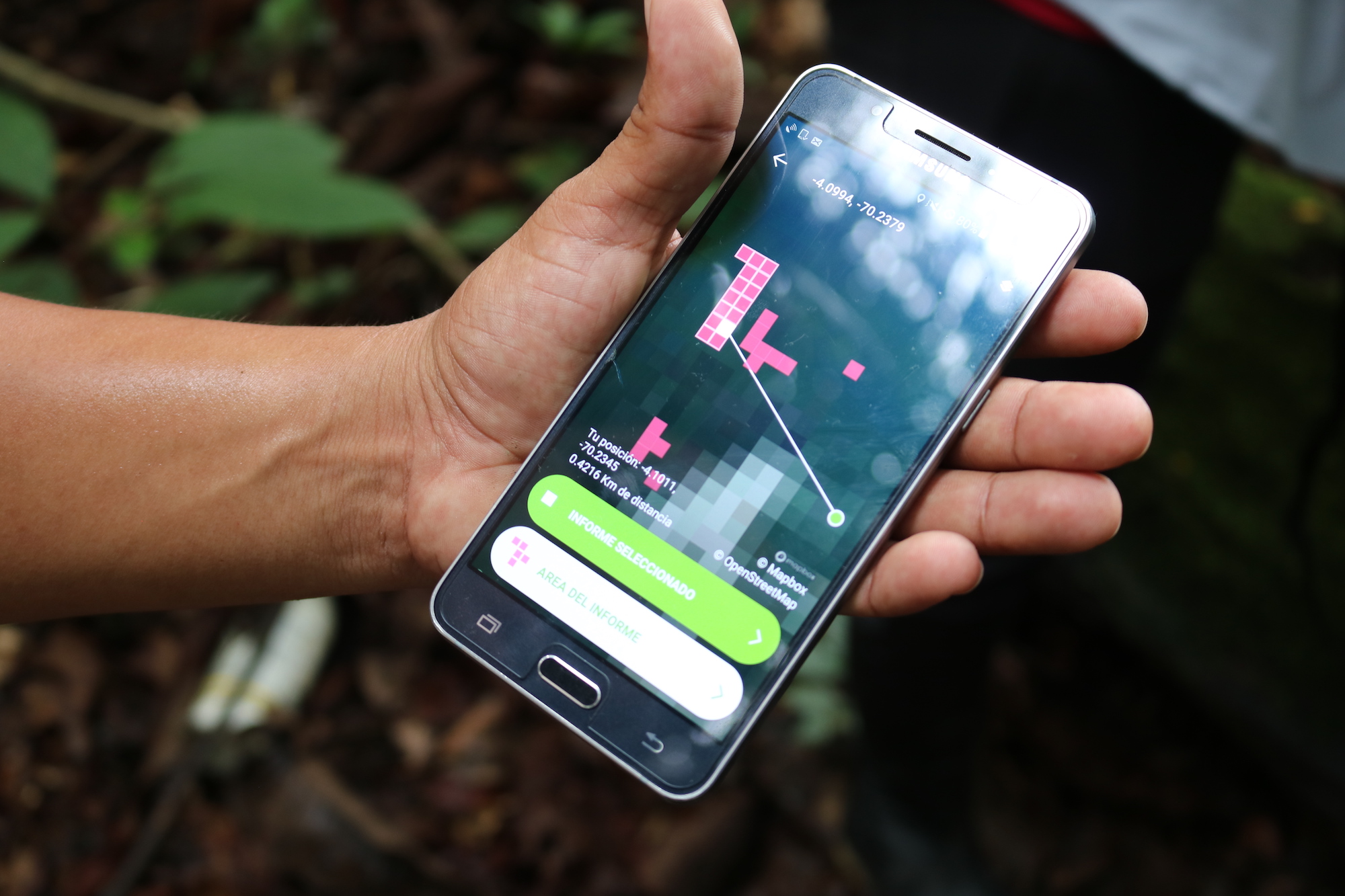
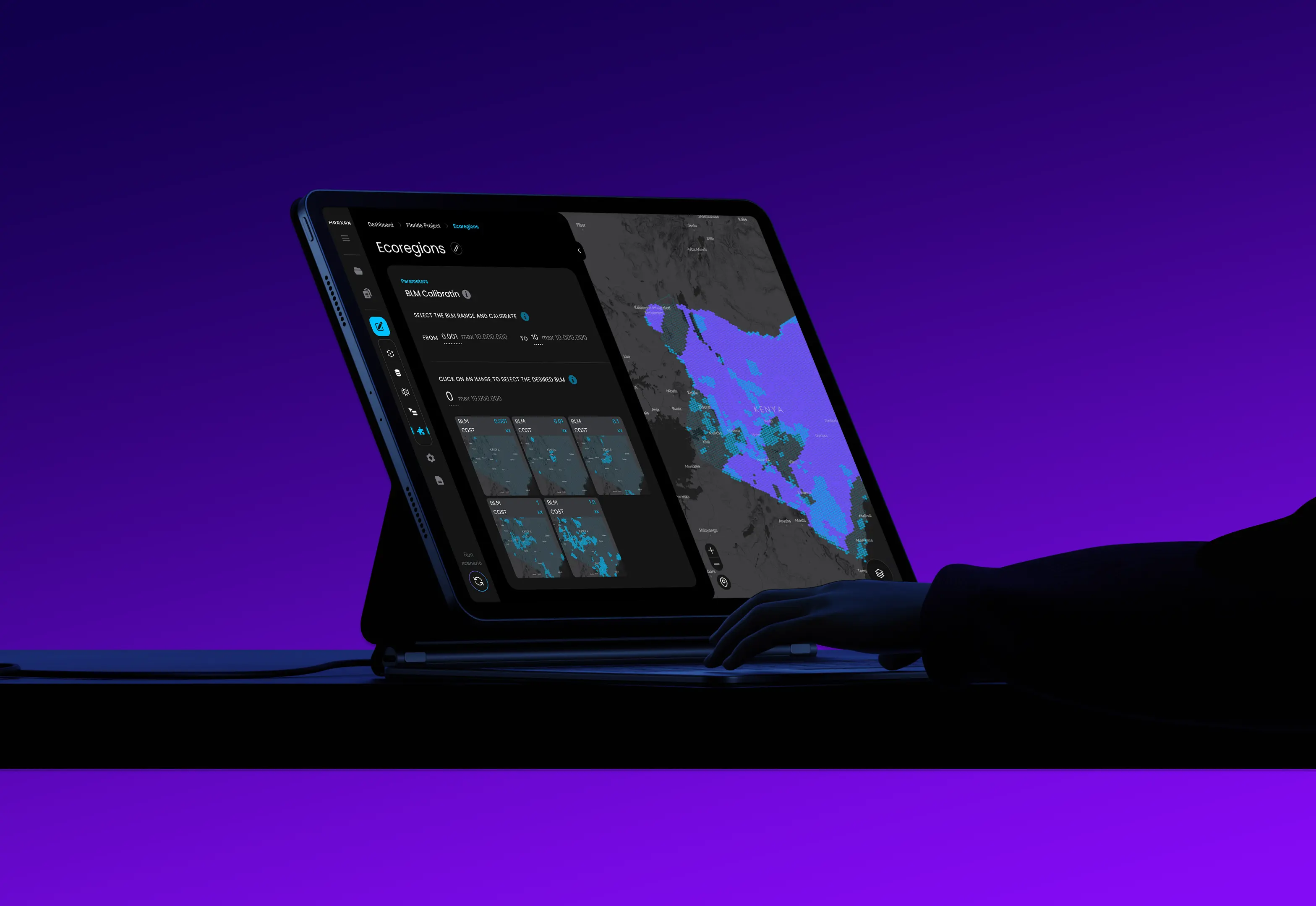
Marxan is an open-source conservation planning tool used worldwide, now evolved into a cloud platform built with The Nature Conservancy (TNC) and Microsoft to enable scalable, collaborative scenario planning.
“Marxan integrates cutting-edge conservation science into practical, evidence-based decision-making.” ⎯ Lucas Joppa, Founder of Microsoft AI for Earth
.webp)

Role: Design Lead
Designing the foundation for a platform built for an entire community
Core Contributions:
- Stakeholder & Tech Alignment: Collaborated with Microsoft and TNC teams to translate scientific requirements and ML-enabled capabilities into a coherent, high-performance product experience.
- User Testing & Iterative Design: Led continuous testing sessions with real users in a dedicated community channel, gathering direct feedback to iterate on features and optimize the platform’s real-world usability.
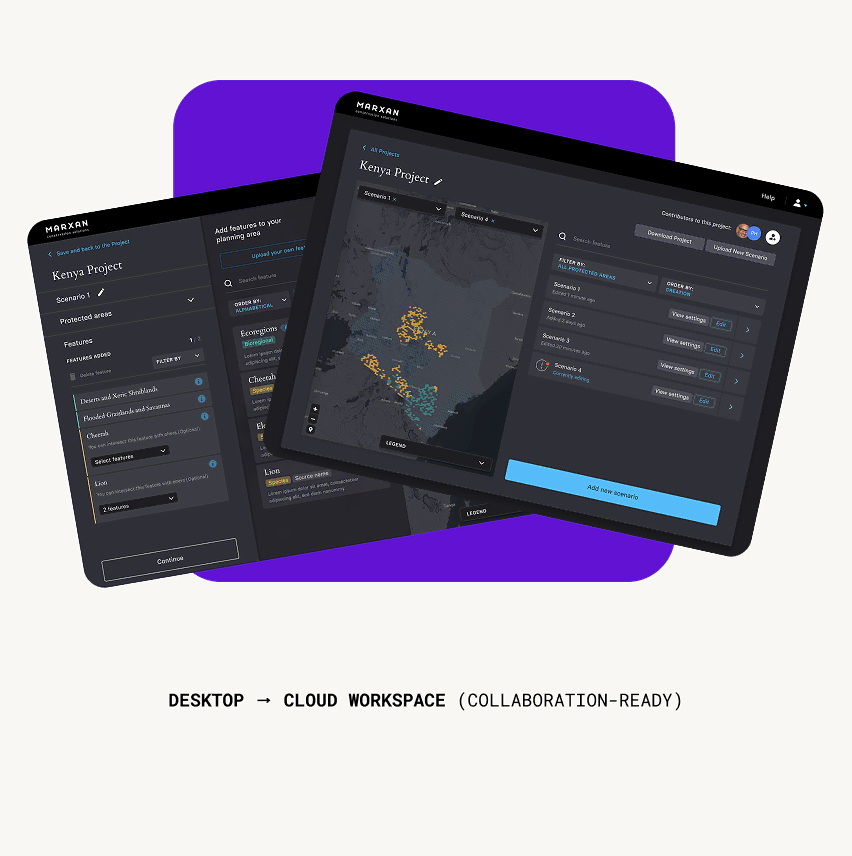
- Permissions & Collaboration Workflows: Designed structures for public and private workspaces, translating complex permission models into clear team flows.
- Visual Identity & Interface Design: Established the platform’s UI language and branding, creating scalable layouts and reusable patterns to make complex planning workflows intuitive and consistent.
Product Journey Milestones
01
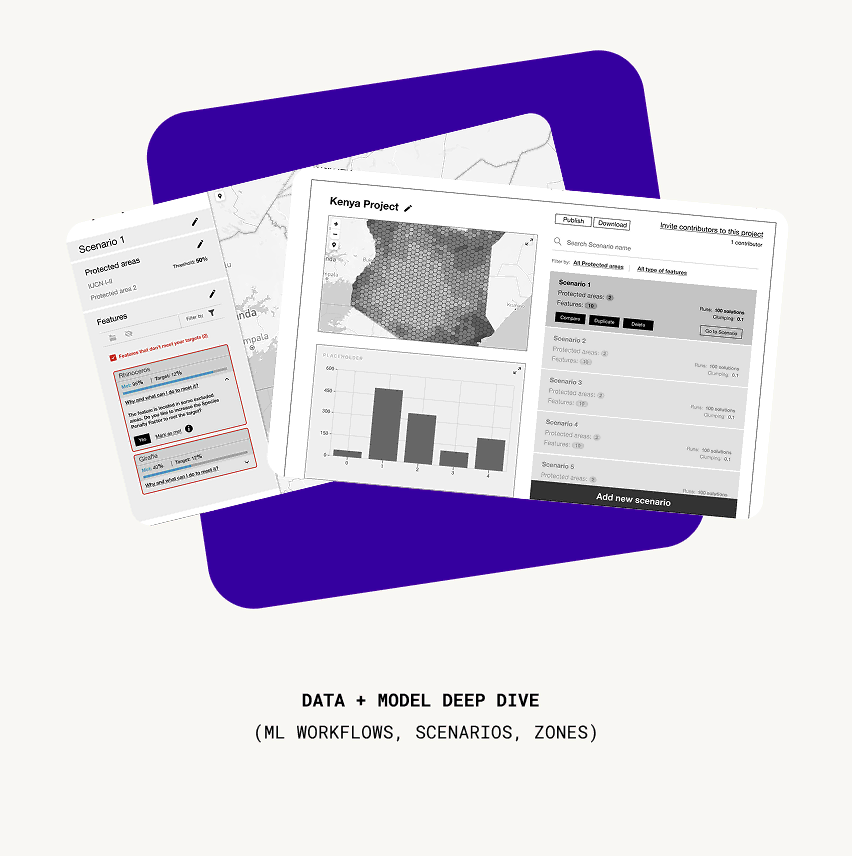
Translate planning logic into user choices: scenario types, outputs, and Marxan with Zones style multi-zone planning.
02
03
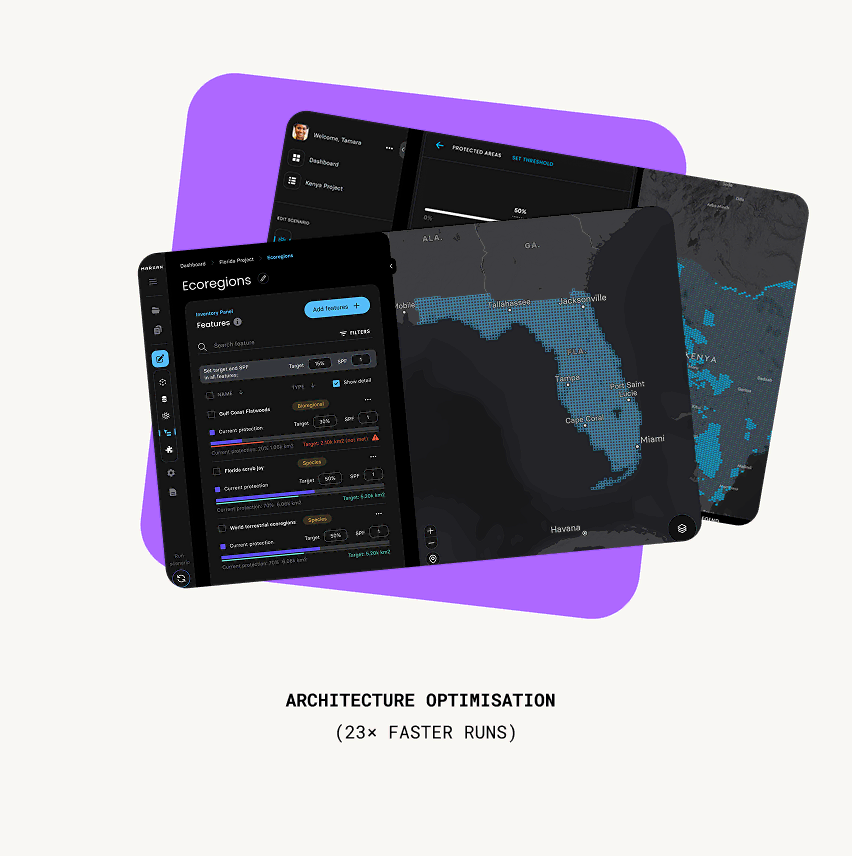
Improve the platform’s architecture so iteration becomes truly usable at scale.
Results
A platform that scales with both ambition and community feedback
1,300+ organisations in 100+ countries
Adopted by a global community, enabling teams to plan, collaborate, and share scenarios in one cloud workspace.
Near real-time decisions (even with big datasets)
Made large-scale planning feel responsive by reducing friction in setup and iteration, even with heavy datasets.
From 23 minutes → 1 minute
Turned reruns into a fast feedback habit: teams could validate trade-offs and converge on decisions without pausing the session.
Smoother workflow during long computations
Built trust during long runs with clear system states and safe recovery, so users always knew what was happening and what to do next.